

Home > HIDROSTAN® > References Roof Waterproofing
HIDROSTAN® Waterproofing References Vertical Garden and Green Roof

Back to the beginning | go to Blog Articles
References and Documents
References
Papers
HIDROSTAN® Technical Data Sheets >
HIDROSTAN® Materials Kit
HIDROSTAN® Installation Manual
Brochure


Back to Blog Articles | Contact
Basic information
EPDM waterproof root-resistant membranes for vertical gardens and green roofs
The creation of a vertical garden or a green roof system requires reliable, durable technical solutions that guarantee maximum protection for the structures. Thanks to our EPDM waterproof membranes, we offer complete systems that integrate high-quality components, designed to combine aesthetics, efficiency, and environmental sustainability.
A fundamental element of our systems is the root barrier membrane, certified for over 30 years, designed to resist root penetration and preserve the integrity of the substrate over time, even in the most challenging climatic and humidity conditions. This protection is essential for both extensive and intensive green roofs, as well as for vertical facade gardens, where durability and the absence of extraordinary maintenance are priority requirements. All our waterproof membranesfor green roofs and vertical gardens are developed in accordance with European standards, ensuring long-term performance.
WHAT ARE VERTICAL GARDENS?
A vertical garden is defined as a wall cultivated with specific plants, designed to integrate vegetation into urban architecture and improve environmental quality. The plants are rooted in special waterproof compartments, designed to ensure a constant and adequate water supply, which is essential for their development and survival.
In addition to being a distinctive and visually striking element of green architecture, the creation of a green wall offers numerous functional advantages: it acts as a veritable "second skin" for the building, contributing to thermal regulation, reducing energy requirements, and mitigating the heat island effect. The transpiration of the plants cools the surrounding air, while the cavity created between the wall and the vegetation promotes air circulation, with a filtering and purifying effect thanks to the absorption of carbon dioxide and the production of oxygen. The plant system also reduces atmospheric pollutants, attenuates noise, and reduces reverberation, as well as acting as a barrier to the spread of fire. No less important are the psychological benefits and aesthetic value that a vertical garden brings to buildings.
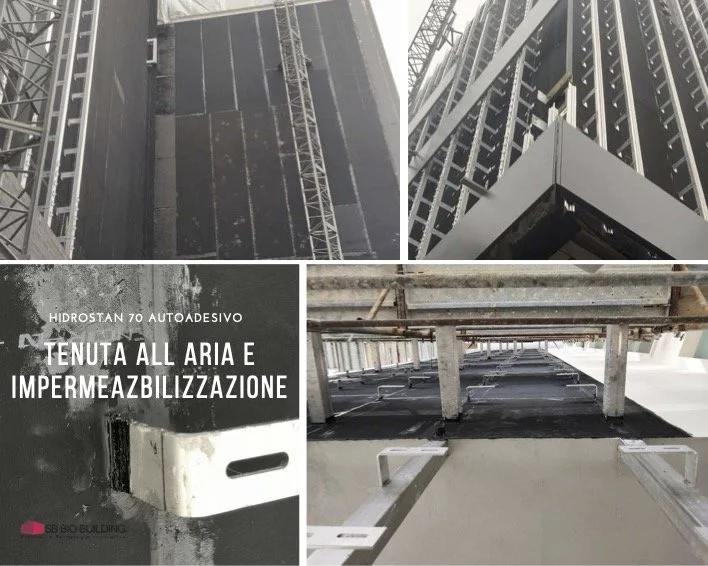
However, to ensure the proper functioning and durability of these systems, adequate waterproofing is essential to act as a technical interface between the masonry and the vertical green structure support. This protective layer, made with self-adhesive EPDM membranes, is essential for keeping the perimeter wall dry and preventing unpleasant condensation and mold , which are often linked to inadequate sealing of facade elements such as windows. A 1 mm gap one meter long can cause up to 0.8 liters of condensation per day in the structure, and it is easy to understand how much damage this phenomenon can cause. Wet material conducts more heat than normal, so condensation caused by a lack of airtightness worsens the energy efficiency of the building envelope.
What are hanging gardens or green roofs?
Hanging gardens or green roofs are construction systems that involve creating a layer of vegetation on the roof or other horizontal/slightly sloping surfaces of buildings, with the aim of combining aesthetic, environmental, and performance functions.
The typical structure of a green roof comprises several layers: structural support, vapor barrier (when necessary), thermal insulation, root-proof waterproofing (essential to prevent infiltration and damage from root penetration), drainage layer, growing medium, and vegetation.
In this context, EPDM root-resistant waterproof membranes represent a technologically advanced solution, as they combine high elasticity and resistance to atmospheric agents with a durability of over 50 years. EPDM (Ethylene Propylene Diene Monomer) is chemically stable, resistant to UV rays, temperature changes, and the aggressive action of roots. The anti-root treatment prevents roots from penetrating and compromising the waterproofing, ensuring long-term protection of the building and drastically reducing maintenance costs.
Some more virtuous countries, such as Basel (Switzerland), are a prime example, having introduced regulations that make green roofs mandatory on new or renovated buildings with flat roofs, creating one of the most extensive urban "green corridors" in Europe. Hamburg (Germany) has launched an incentive program with financial contributions for the construction of green roofs, with the objectives of reducing emissions and sustainable rainwater management, and Toronto (Canada) was the first major city in North America to introduce mandatory regulations for green roofs on new buildings of a certain size.
In summary, roof gardens are not only a decorative architectural element, but also a strategic green infrastructure for urban sustainability. The use of root-resistant EPDM waterproofing membranes is essential to ensure durability, efficiency, and safety, guaranteeing that the ecological benefits are accompanied by effective protection of the building.
Why choose a waterproof, root-resistant membrane?
When designing and constructing green roofs, roof gardens, or surfaces in direct contact with the ground, protecting the underlying structure from infiltration and damage is crucial to ensuring the durability of the work. EPDM (Ethylene Propylene Diene Monomer) root-resistant waterproof membranes are the optimal choice in this context, thanks to their excellent physical properties and ability to withstand both water and root penetration over the long term.
EPDM material is known for its high elasticity and resistance to UV rays, extreme temperatures, and chemicals, qualities that make it stable and high-performing over time. Its anti-root formulation prevents perforation or intrusion by the root system, thus avoiding damage that could compromise waterproofing and lead to costly repairs.
A crucial aspect is the management of joints: in traditional membranes, welded or overlapping points are areas that are potentially vulnerable to infiltration and root penetration. Our company offers membrane solutions cut to size, made in a single piece, minimizing joints and consequently the possibility of infiltration and root penetration at the connection points. This approach not only ensures faster and safer application, but also significantly increases the level of protection and reliability of the waterproofing system.
Choosing an EPDM waterproof root barrier membrane means investing in longevity, safety, and sustainability, ensuring total protection for the structure against water and invasive roots, with the certainty of a technically advanced and tailor-made solution.
Back to top
Contact Form
Contact us now or leave your details below for a free professional consultation