

Home > HIDROSTAN® > References Roof Waterproofing
HIDROSTAN® References for waterproofing firefighting tanks

Back to the beginning | go to Blog Articles
References and Documents
References
Papers
HIDROSTAN® Technical Data Sheets >
HIDROSTAN® Materials Kit
HIDROSTAN® Installation Manual
Brochure




Back to Blog Articles | Contact
Basic information
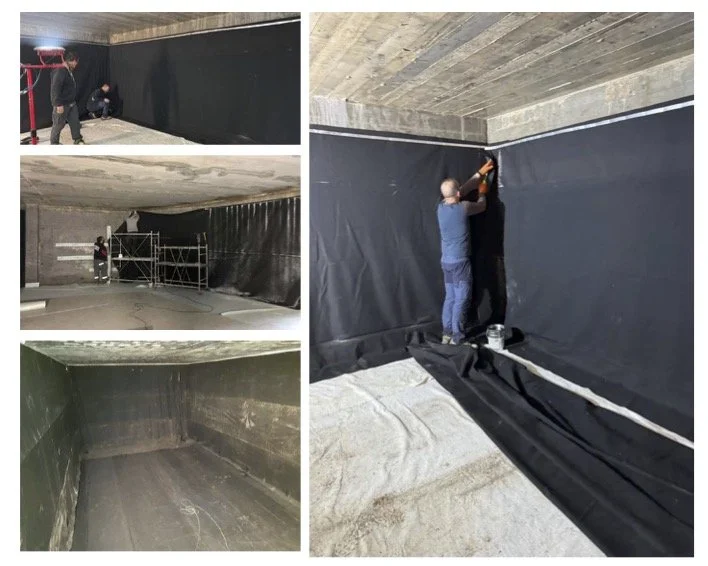
Waterproofing inside the containment tank with Hidrostan EPDM membranes
One of the most important problems that builders face when constructing underground concrete water tanks is waterproofing.
Ensuring that there are no water leaks from the tank or water infiltration from the surrounding soil is one of the main concerns for those who build concrete tanks, because they must withstand the negative pressures that develop when the tank is emptied or filled, and combat the forces that come from the rising water table and the surrounding soil.
Fire protection systems, also known as active fire protection systems, consist of a set of components, including internal waterproofing with Hidrostan EDDM waterproofing membranes.
Thanks to their reserve water supply, fire tanks provide peace of mind and protection against disasters. In areas of the country where water use is restricted during droughts, water reserves can also be used for lawn irrigation. A green lawn reduces the risk of fire.
Creating durable waterproofing for a concrete firefighting tank is one of the most complex challenges in the construction industry.
The use of membranes in EPDM Hidrostan® is a highly effective and reliable solution to these critical issues. Thanks to their high flexibility and resistance.
Before installing the Hidrostan® EPDM waterproofing membrane, check that the substrate conditions are suitable. To ensure lower tensile stress on the membrane, allow for at least 2% in length and width compared to the drawings.
Thoroughly clean the concrete floor and walls and use a TNT fabric before laying the membrane.
Position the Hidrostan® EPDM waterproof membrane according to the installation diagram provided, securing it mechanically using anchors at the top of the tank, aligning the sheets, avoiding tension, and allowing it to rest before fixing.
After positioning the sheets, proceed to fold the edges. The edges where the membranes meet should overlap by approximately 10 cm so that the areas in contact with each other are ready for bonding.
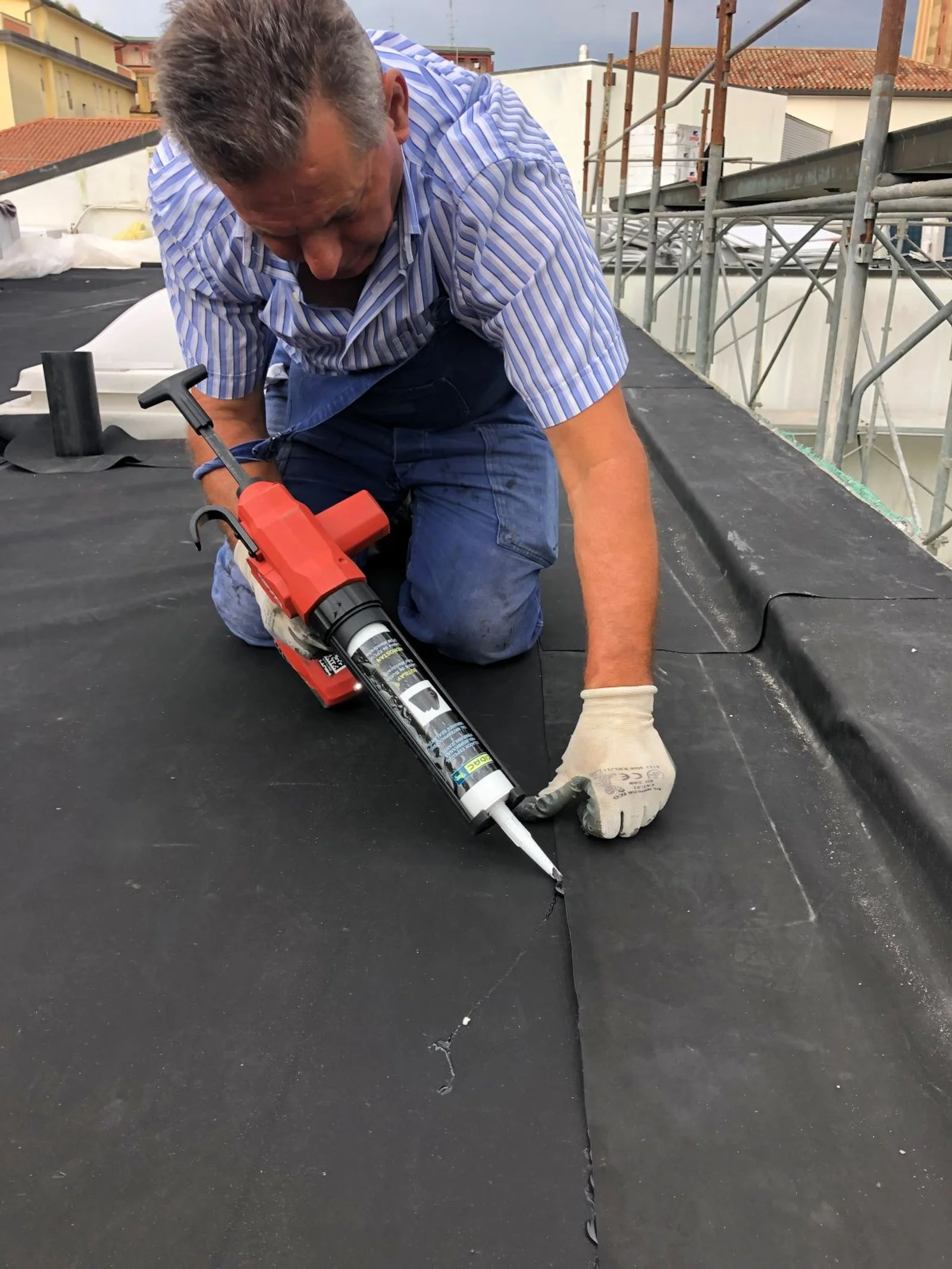
The overlapping areas must be completely clean and dry, and on both sides of the overlap, apply a layer of AC-221 adhesive 8 cm long on each side . On the remaining 2 cm , apply Mastic Sealant (SMP). Use a roller or brush to apply the adhesive. Once AC-221 Adhesive has been applied to each side of the overlap, allow the solvent to evaporate for about 15 minutes, until the adhesive is no longer sticky to the touch.
Once the solvent has evaporated, fold the top sheet over the bottom sheet, completing the overlap, so as to avoid wrinkles or air pockets, and apply the Mastic Sealant (SMP).
To avoid the formation of wrinkles and air pockets, we recommend using a smooth, heavy roller (steel), pressing it firmly first in the transverse direction and then lengthwise.
Chemical compatibility of EPDM
EPDM is known for its excellent resistance to atmospheric agents, UV rays, and ozone, and for its good chemical stability towards many substances, in particular water, saline solutions, diluted acids, and diluted alkalis.
However, it is not universally resistant to mineral oils, hydrocarbons, fuels, and certain organic solvents (e.g., gasoline, kerosene, toluene), which can damage it quickly, and certain strong oxidizing agents (e.g., concentrated nitric acid, peroxides) accelerate its degradation.
A fire suppression tank or containment basinis designed to hold water for use in emergencies. However, in industrial settings, it can also serve a secondary safety function: it can become a collection point in the event of accidental chemical spills (from tanks, process plants, pipes).
The choice of using an EPDM membrane for waterproofing and its compatibility with certain chemicals is shown in the following table, often expressed with type codes:
A = excellent (no significant changes)
B = good (minor changes but still acceptable)
C = poor (rapid deterioration, use not recommended)
D = not compatible (failure in the short term)
See chemical compatibility table below
Waterproofing underground tanks
Before starting any work, it is mandatory to carefully check the environmental and personal safety conditions in order to ensure the safety of operators and the correct execution of the intervention, and to check that there is no standing water in order to avoid dangerous working conditions and the risk of electrocution when using electrical equipment. If water is present, it must be completely removed using submersible pumps or temporary drainage systems.
One of the most important issues that builders face when constructing underground concrete water tanks or cisterns is waterproofing. Ensuring that there are no water leaks or seepage from the surrounding soil is one of the biggest concerns for those building a concrete tank, because it must withstand the negative pressures that develop when the tank is emptied or filled, and combat the forces that come from the rising water table and the surrounding soil.
Fire protection systems, also known as active fire protection systems, consist of a set of components, including internal waterproofing with HIDROSTAN® waterproofing membranes in EPDM.
The installation of the HIDROSTAN® waterproofing membrane system must be carried out by qualified personnel or trusted installers who are adequately trained and have a good knowledge of the installation system. The area to be waterproofed must be clear, clean, and free of sharp objects. Avoid conditions of high surface humidity.
Back to Basic information | Contact
Chemical compatibility table
| Substance | EPDM |
|---|---|
| Acetylene | A |
| Acetone | D |
| Fatty Acids | C |
| Acetic Acid | D |
| Carbonic acid | B |
| Citric Acid | D |
| Hydrochloric acid (20%) | C |
| Hydrochloric Acid (37% Hot) | D |
| Hydrochloric Acid (37% Cold) | C |
| Hydrofluoric acid (20%) | D |
| Hydrofluoric acid (75%) | D |
| Hydrofluoric Acid (100% Cold) | D |
| Hydrofluoric acid (100% hot) | D |
| Formic acid | D |
| Phosphoric acid (40%) | D |
| Phosphoric acid (40-100%) | D |
| Phosphoric Acid (Crude) | D |
| Nitric acid (5-10%) | D |
| Nitric Acid (20%) | D |
| Nitric Acid (50%) | D |
| Nitric Acid (Concentrated) | D |
| Nitrous acid | D |
| Sulfuric acid (10%) | C |
| Sulfuric acid (10-75%) | D |
| Sulfuric acid (75-100%) | D |
| Sulfurous acid | C |
| Ammonia Water | B |
| Sea Water | A |
| Pool Water | B |
| Distilled/demineralized/deionized water | A |
| Emulsified water (white water) | A |
| Soapy water | A |
| Acidic Waters | A |
| Acque Bianche (from Cartiera) | A |
| Ethyl Alcohol | A |
| Methyl Alcohol | B |
| Propyl Alcohol | A |
| Ammines | D |
| Ammonia (10%) | D |
| Anhydrous Ammonia | B |
| Aniline | D |
| Antifreeze | A |
| Plating baths: Silver plating | A |
| Plating baths: Chrome plating | D |
| Plating baths: Nickel plating | A |
| Benzene | D |
| Gasoline | C |
| Benzene / Benzyl Alcohol | D |
| Potassium bicarbonate | A |
| Sodium Bicarbonate | A |
| Carbon dioxide | A |
| Sulfur dioxide | D |
| Butane | A |
| Bleach | C |
| Aviation fuel (JP3, JP4, JP5) | A |
| Kerosene | A |
| Ketones | D |
| Chlorine (Anhydrous Liquid) | D |
| Cleaning products | A |
| Herbicides | B |
| Hexane | A |
| Ethane | A |
| Freon 11 | C |
| Freon 113 | A |
| Freon 12 (Aqueous Solution) | A |
| Freon 22 | D |
| Freon T.F. | D |
| Fluorine | D |
| Formaldehyde | C |
| Diesel fuel | B |
| Glycerin | A |
| Glycol / Ethylene Glycol | A |
| Propylene Glycol | A |
| Aromatic Hydrocarbons | D |
| Hydrogen Gas | A |
| Hydrogen sulfide (dry) | D |
| Hydrogen Sulfide (Aqueous Solution) | C |
| Potassium hydroxide | B |
| Sodium hydroxide (20%) | A |
| Sodium hydroxide (50%) | D |
| Sodium hydroxide (80%) | D |
| Ink | A |
| Rust inhibitors | A |
| Sodium hypochlorite (20%) | C |
| Sodium hypochlorite | B |
| Lacquers / Varnishes | D |
| Tannin base liquids | C |
| Sugar liquids | A |
| Lubricants | A |
| Methane | A |
| Naphtha | B |
| Naphthalene | D |
| Fuel oils | A |
| Hydraulic oils (petroleum) | A |
| Hydraulic oils (synthetic) | C |
| Oleum | D |
| Rapeseed oil | B |
| Cutting oil (integral) | B |
| Cutting oil (emulsified) | A |
| Diathermic oil | A |
| Mineral oil | A |
| Olive oil | A |
| Palm oil | A |
| Silicone oils | A |
| Transformer oil | A |
| Paraffin wax | A |
| Pentane | A |
| Potassium permanganate | A |
| Hydrogen peroxide (10%) | A |
| Hydrogen peroxide (30%) | D |
| Hydrogen peroxide (50%) | D |
| Sodium Peroxide | C |
| Sour crude oil (S>1%) | C |
| Petrolio greggio sweet (S<1%) | C |
| Potash | A |
| Propane - LPG | A |
| Brine | A |
| Caustic soda (20%) | A |
| Caustic soda (50%) | D |
| Caustic soda (80%) | D |
| Solvents for lacquers/paints | D |
| Dyes | D |
| Turpentine | D |
| Urine / Urea | A |
| Paints (aromatic) | B |
Back to top
Contact Form
Contact us now or leave your details below for a free professional consultation