


Back to the beginning | go to Blog Articles
References and Documents
References
Papers
HIDROSTAN® Technical Data Sheets >
HIDROSTAN® Materials Kit
HIDROSTAN® Installation Manual
Brochure






Back to Blog Articles | Contact
Basic information
EPDM membranes: the basic technology
To permanently address the critical issues associated with flat roof leaks, one of the most effective solutions is to useHIDROSTAN® waterproofing membranes made of EPDM (Ethylene Propylene Diene Monomer). EPDM belongs to the class of elastomers, i.e., polymeric macromolecules—of natural or synthetic origin—characterized by high elasticity. These materials show noticeable deformation even under relatively low stress, but have the ability to quickly recover their initial shape and size once the load is removed, thanks to their viscoelastic nature. The elasticity and strength of EPDM derive from an industrial process known as vulcanization, through which the polymer chains are cross-linked by the formation of stable chemical bonds. This three-dimensional structure, typical of elastomers, hinders viscous flow under load and ensures elastic memory even under prolonged mechanical and thermal stress.
Long-term warranty for HIDROSTAN® EPDM membranes for roofs
HIDROSTAN® EPDM membranes stand out for their certified life cycle of over 50 years, even when exposed to direct ultraviolet rays, ozone, and extreme weather conditions. Their formulation guarantees exceptional resistance to photo-oxidative aging, preventing hardening, cracking, or loss of elasticity over time. A further technical advantage lies in their ability to absorb and dissipate stresses resulting from sudden temperature changes, for example from intense solar radiation to sudden drops in temperature. This feature makes them particularly suitable for climatic contexts subject to significant daily or seasonal temperature variations, preserving the integrity of the waterproof seal and minimizing the need for maintenance.
Proven installation systems for membranes
The installation of an EPDM waterproof membrane is a crucial step in ensuring the durability and efficiency of the waterproofing system. EPDM technology offers a wide range of application possibilities, each with specific characteristics and well-defined fields of use.
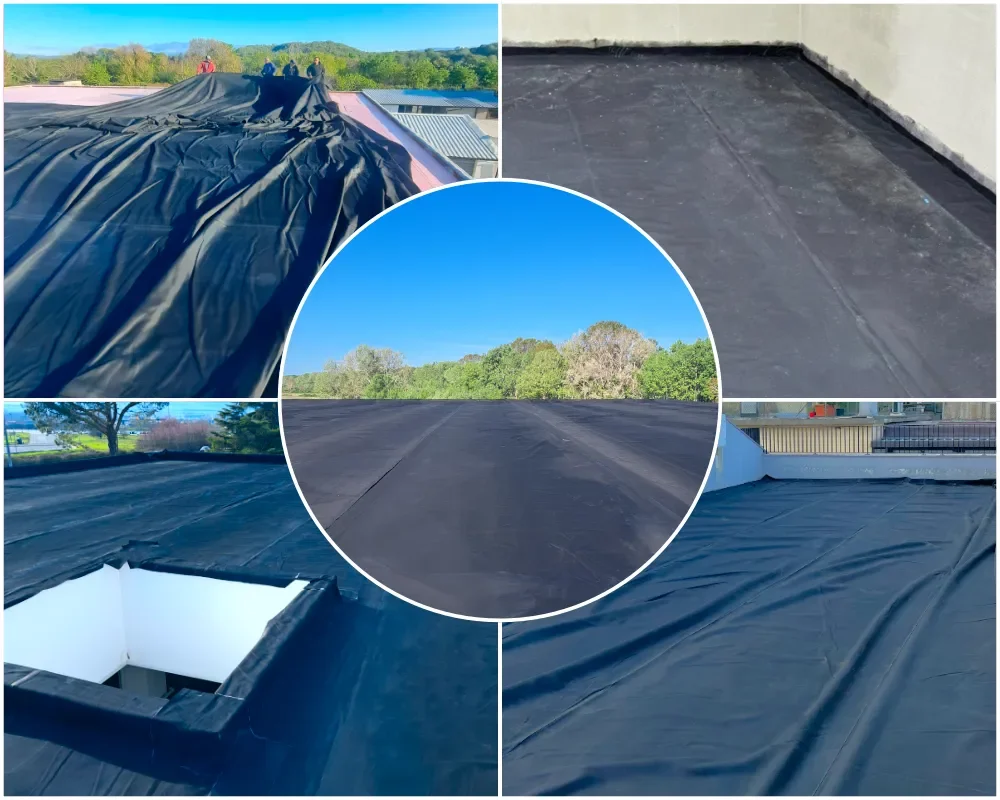
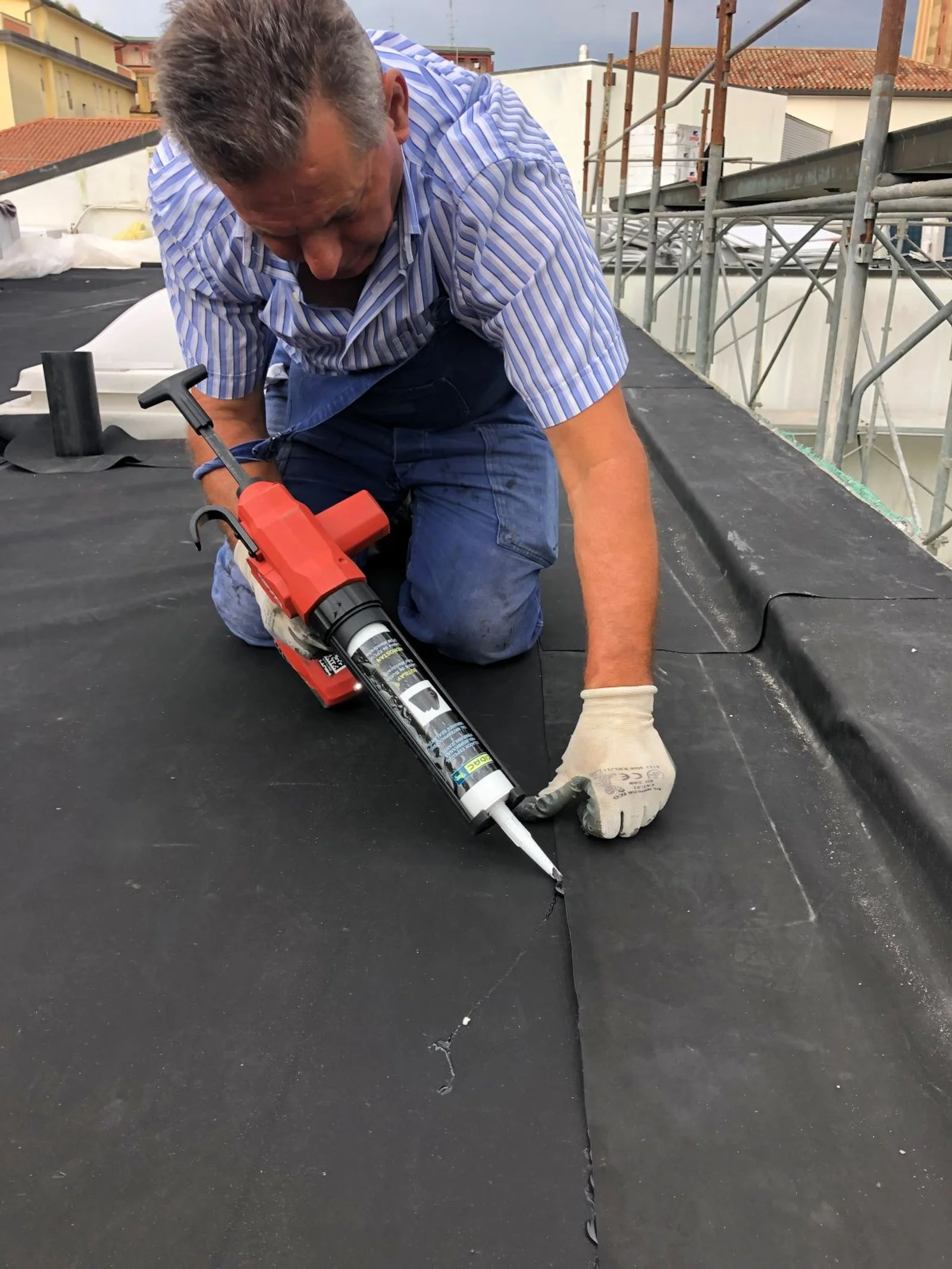
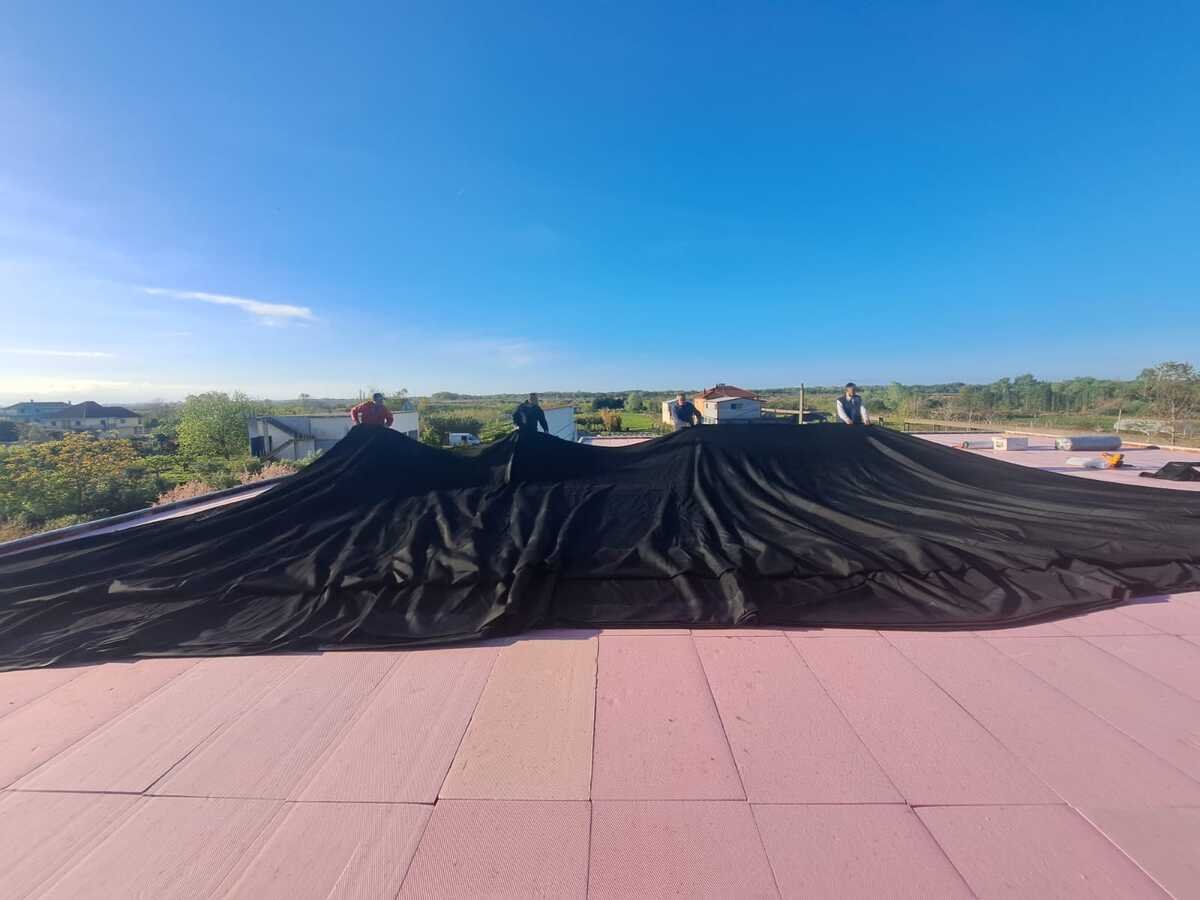
A widely used installation method for standard sheets (measuring 1.50 x 20 ml) is total bonding, where the EPDM is applied over the entire surface of the substrate using specific solvent-based adhesives that are compatible with the material. In contexts where large membrane sheets are required, the ballasted system is used. In this case, the membrane is laid freely and held in place by a layer of gravel or a floating floor. This method is particularly suitable for flat roofs, extensive green roofs, and surfaces where additional protection against UV rays or mechanical stress is required. However, the structure must be dimensioned to support the additional weight of the ballast, and the membrane must be protected with anti-puncture geotextiles.
Waterproof flat roof coverings
Choosing HIDROSTAN® EPDM membranes for a flat roof means investing in a waterproofing system that combines longevity, reliability, and technical performance, offering safe and constant protection for the building for decades, with a significant reduction in maintenance costs and a concrete contribution to the sustainability of the building. Choosing a waterproofing system for a flat roof is a strategic decision to ensure the protection of the building, the durability of the work, and the optimization of long-term management costs. In this context, HIDROSTAN® EPDM membranes stand out as an excellent solution, the result of advanced technological research and proven performance in the field.
Back to top
Contact Form
Contact us now or leave your details below for a free professional consultation